The Future of Sustainable Architecture!
Feb 14, 2026
Designing with the Land: A Site Planning Approach
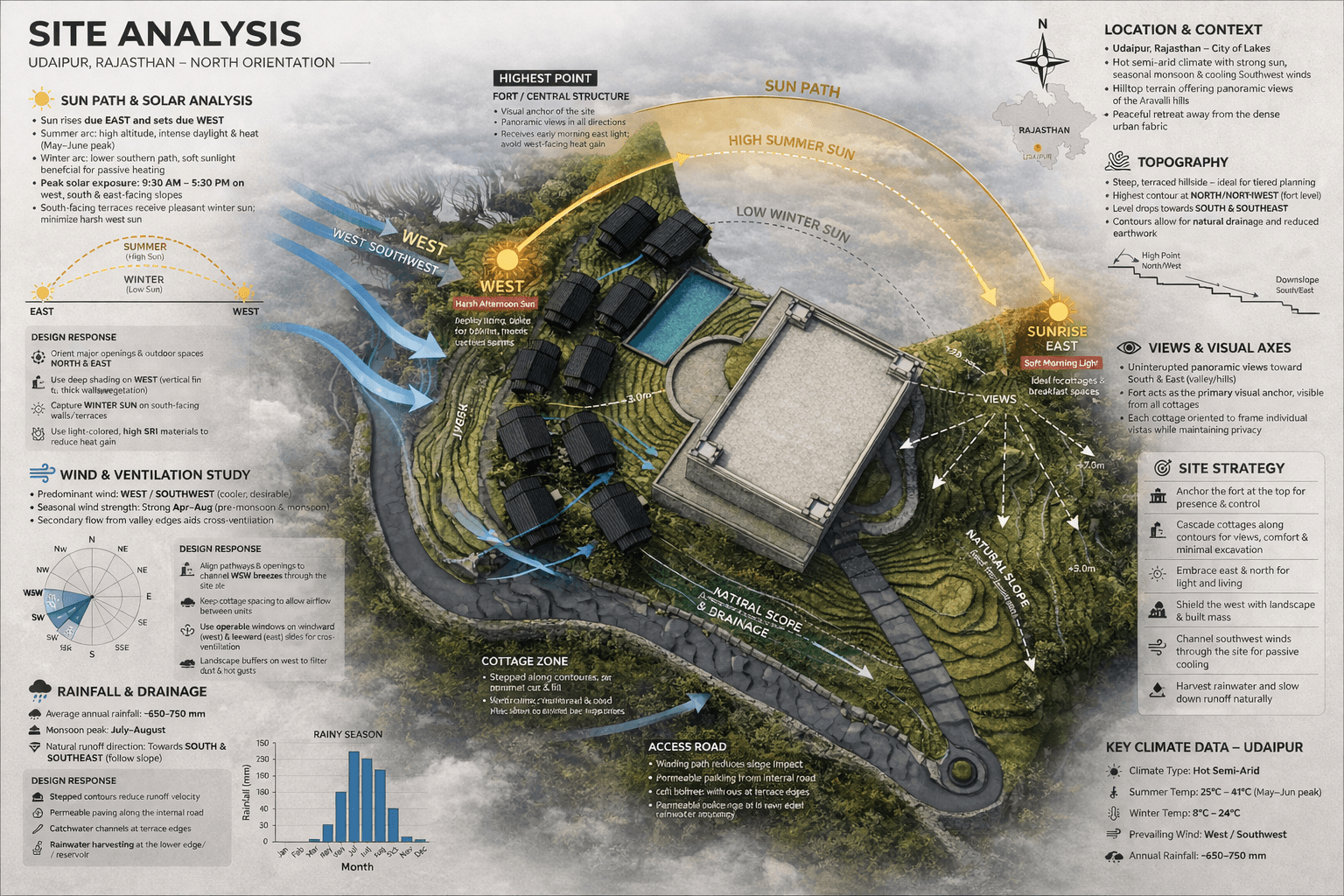
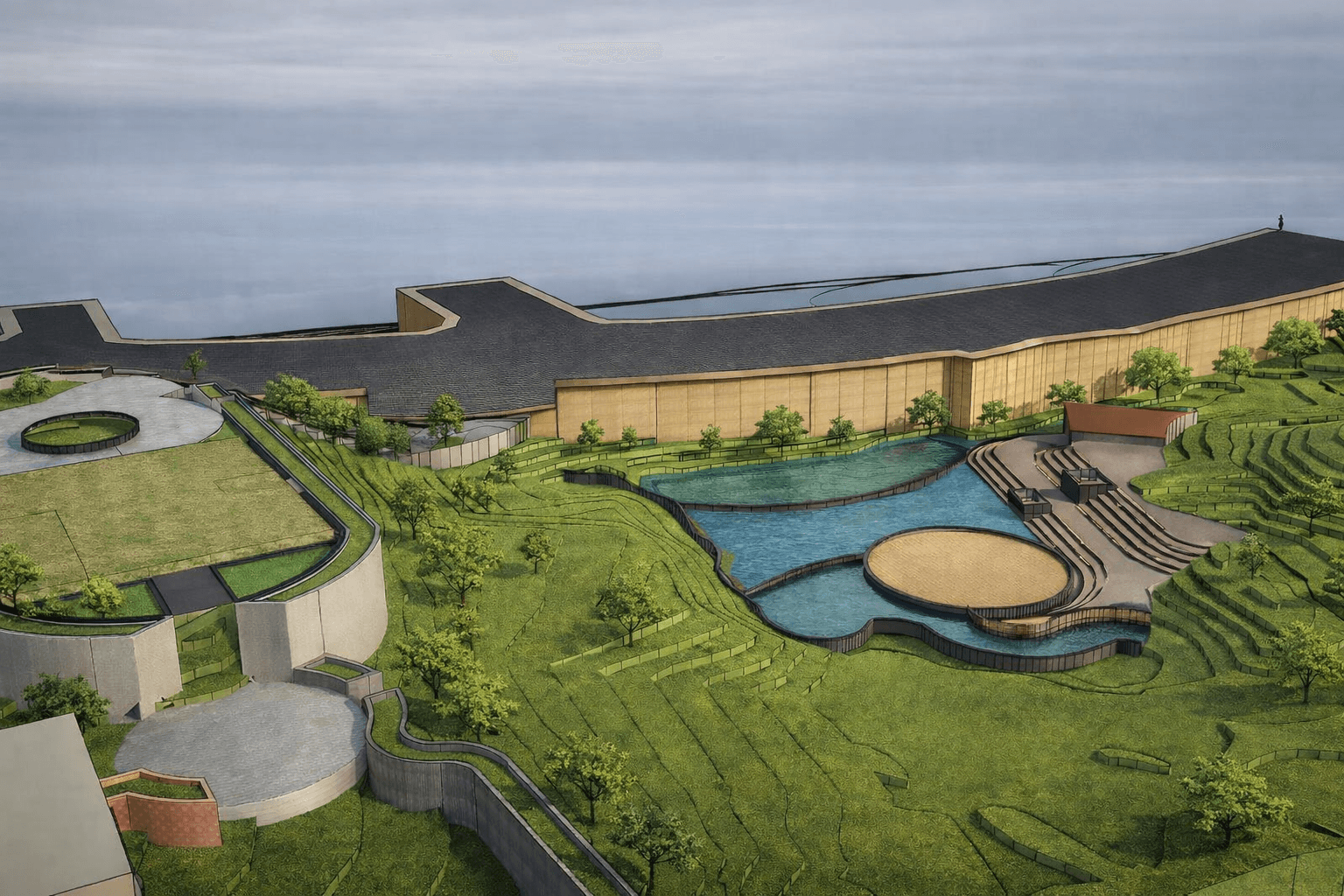
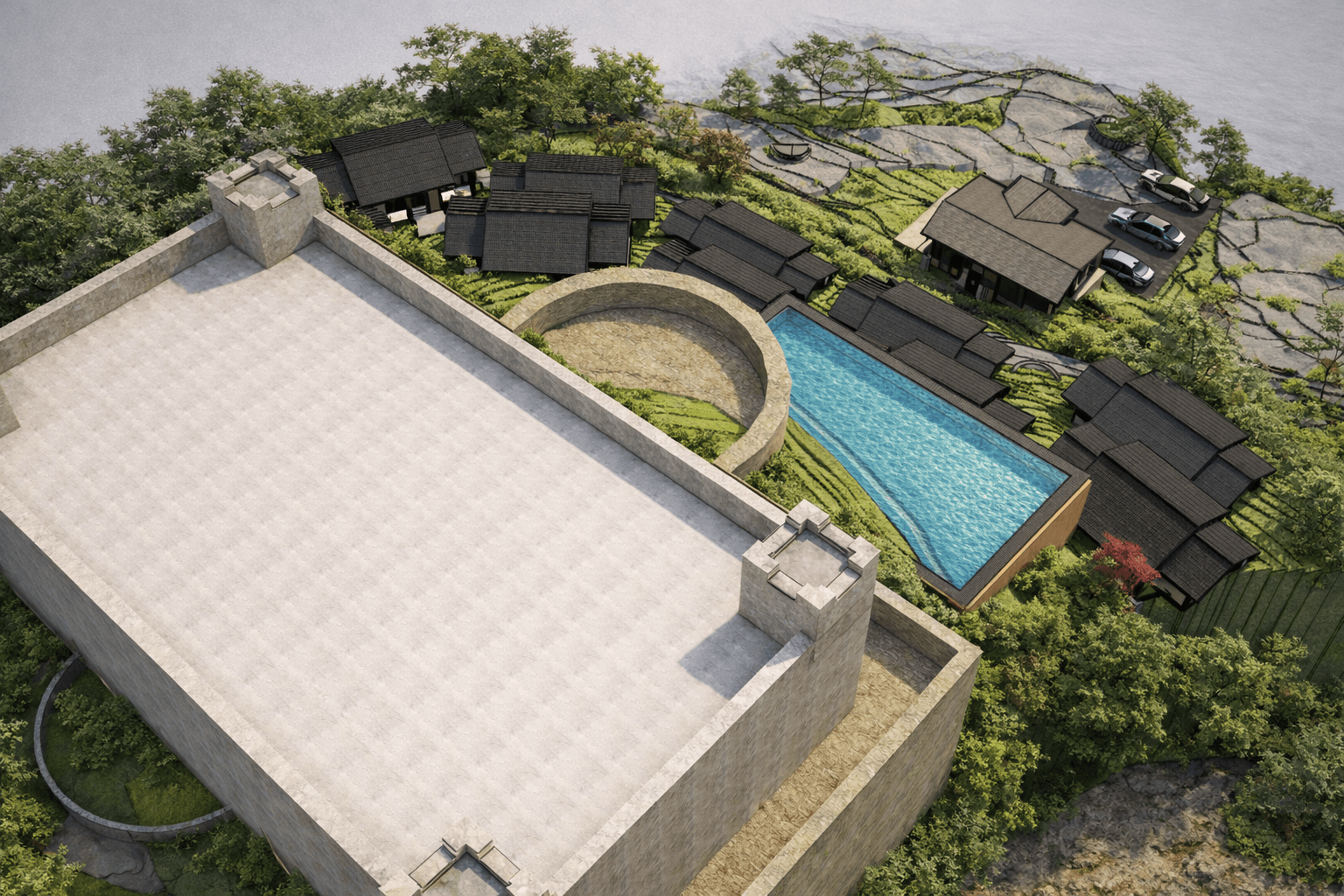
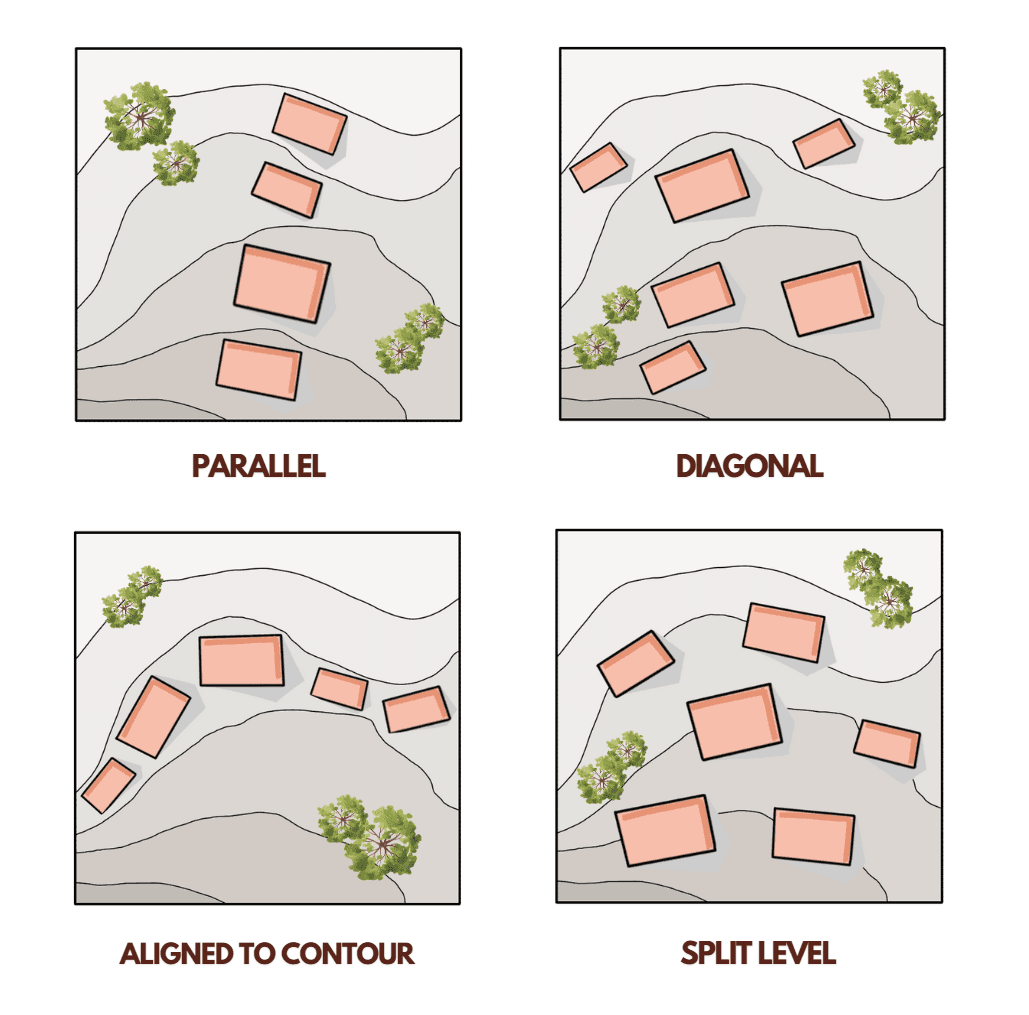
Site planning begins not with construction, but with observation and understanding the land as a living system shaped by climate, topography, and time. In this project, the design is deeply rooted in the natural contours of the hillside, allowing architecture to emerge from the terrain rather than disrupt it. The highest point of the site is reserved for the central structure, establishing a visual anchor, while smaller built units cascade along the contours, minimizing excavation and preserving the integrity of the landscape. This terraced planning not only reduces environmental impact but also enhances spatial hierarchy and views.
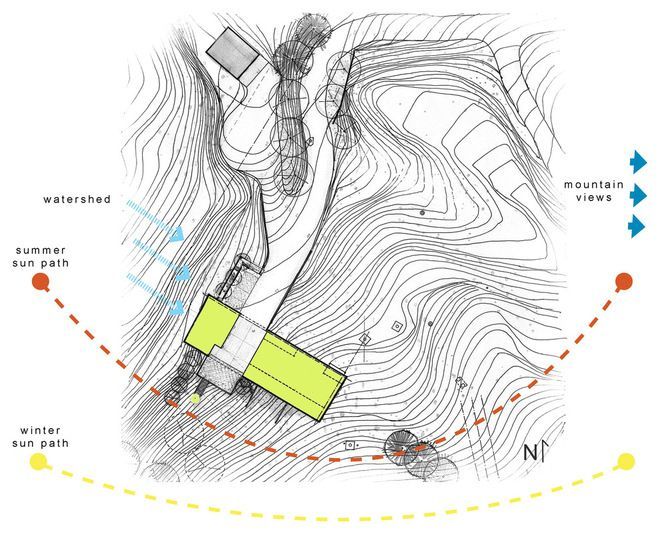
The orientation of built forms is guided by the sun’s movement. Openings and outdoor spaces are directed toward the north and east to capture soft morning light, while the west is carefully shielded using landscape buffers and built mass to reduce heat gain from harsh afternoon sun. Seasonal variations are considered—welcoming winter sunlight while mitigating summer exposure, ensuring a comfortable, climate-responsive environment throughout the year.
Water is treated as an integral design element rather than a constraint. The natural slope directs runoff toward the south and southeast, where drainage systems and water-harvesting strategies are integrated into the landscape. Contour-based planning slows down water flow, allowing it to percolate and recharge the ground, while permeable surfaces further support this process.
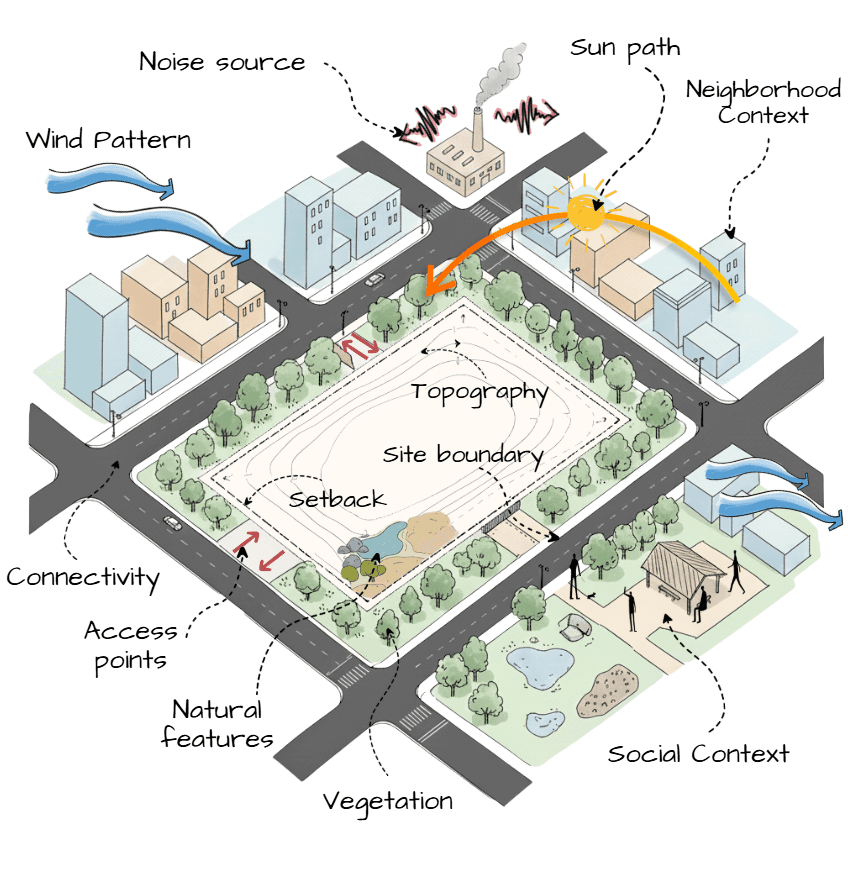
Wind patterns further inform the planning strategy. With prevailing winds from the southwest and west, pathways and building orientations are aligned to channel airflow through the site, enabling natural ventilation. Built forms are spaced to allow cross-ventilation, while vegetation acts as a filter, reducing dust and controlling wind intensity. This passive approach minimizes reliance on mechanical systems, making the development more sustainable.
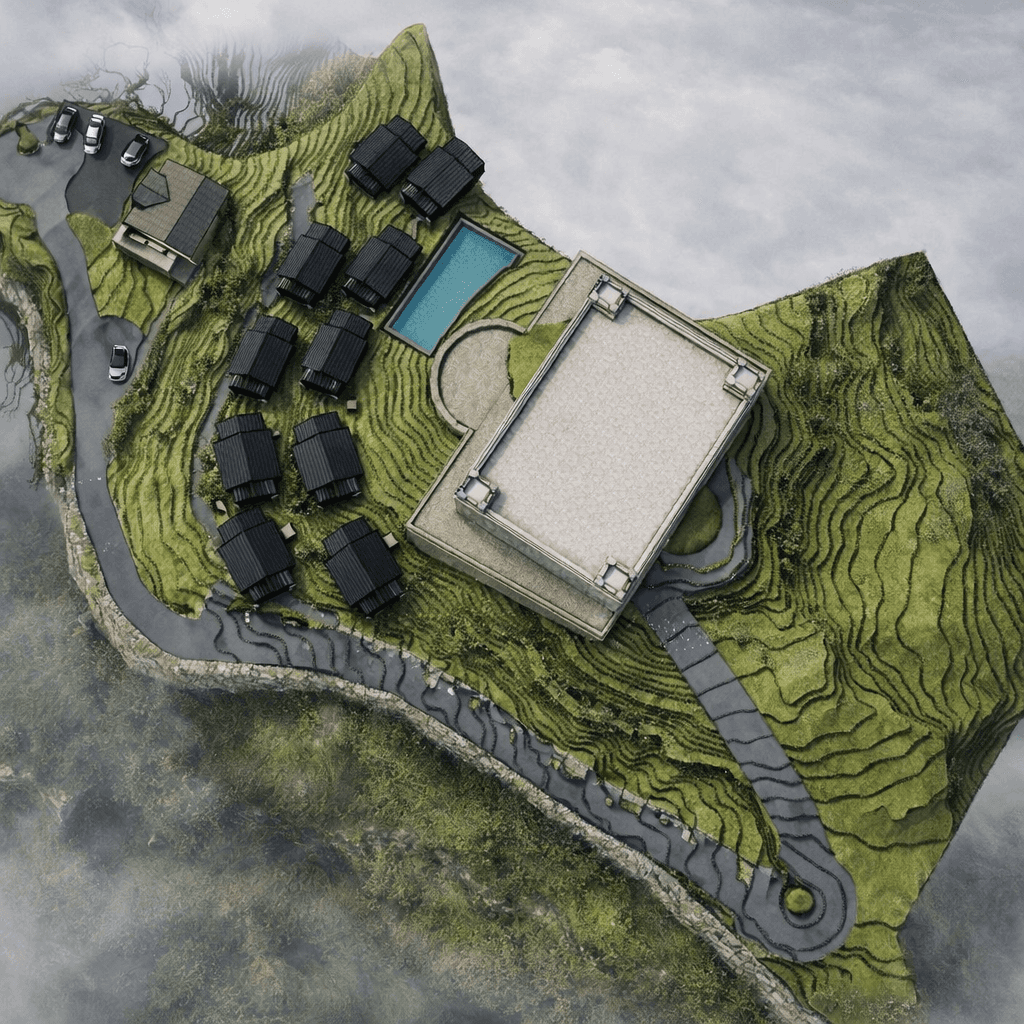
Ultimately, the site planning is a balance between architecture and landscape, where design decisions are not imposed but derived from the site itself. It is an approach that respects the land, enhances environmental performance, and creates a cohesive spatial experience where built form and nature exist in harmony.