Description:
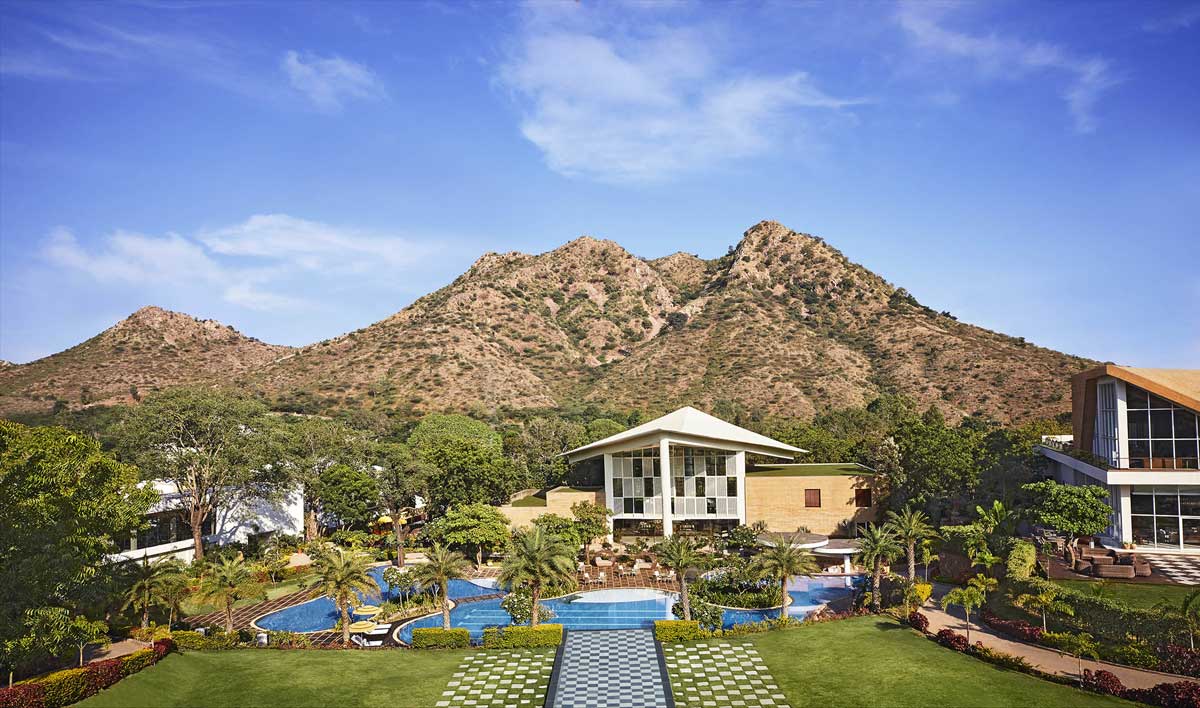
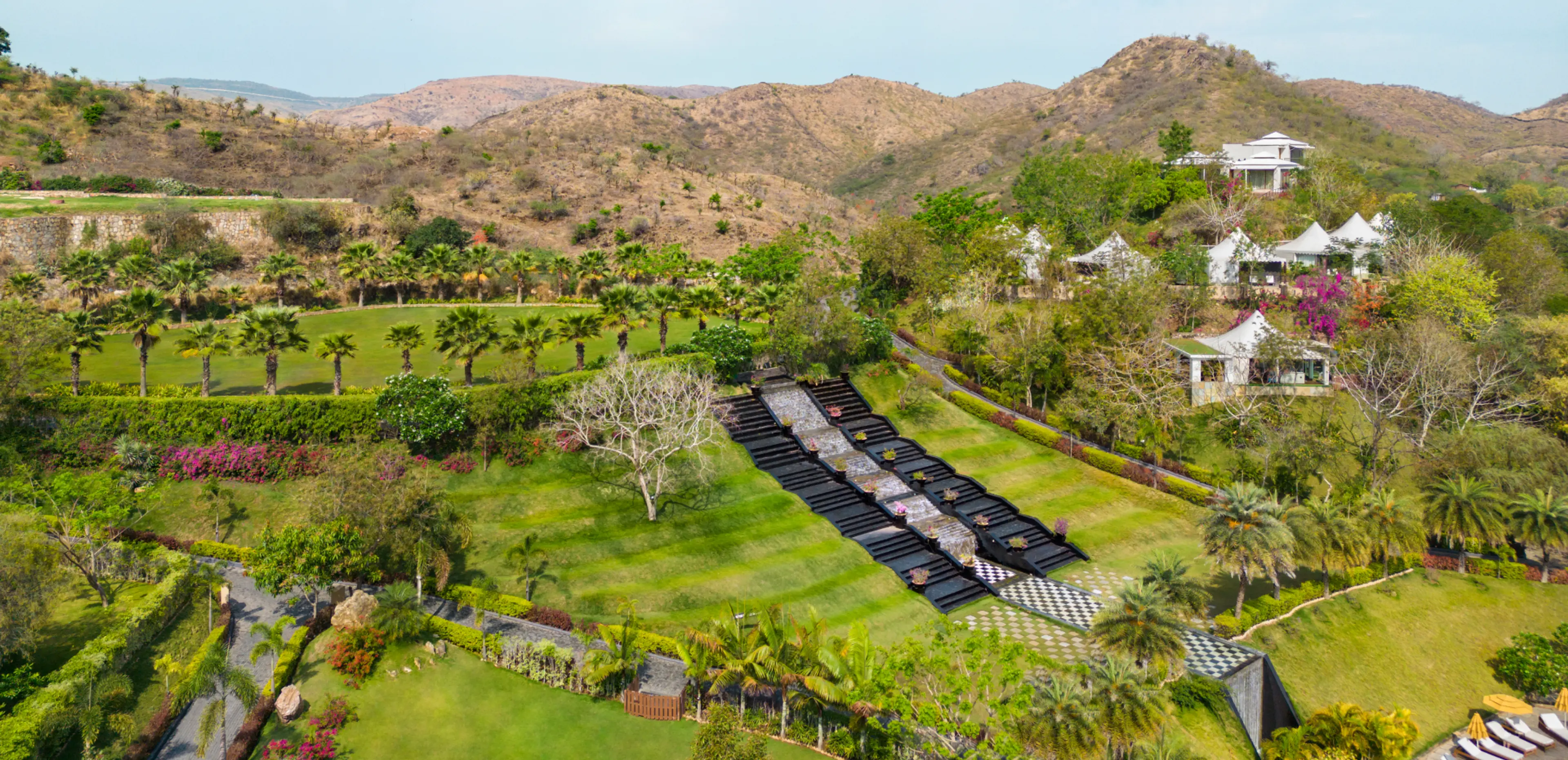
The Taj Aravali Resort & Spa Udaipur is conceived as a seamless fusion of architecture and landscape, where the built form is not imposed on the site but carefully embedded within the rugged terrain of the Aravalli foothills. The design follows a low-rise, horizontally dispersed layout, breaking the mass into smaller clustered units that evoke a traditional village settlement, allowing natural topography and open spaces to become the primary organizing elements. Architecture and landscape are interwoven through courtyards, shaded verandas, and semi-open corridors that blur the boundaries between inside and outside, creating a continuous spatial dialogue. The use of earthy materials such as stone and textured plaster visually anchors the structures to their surroundings, while a hierarchy of outdoor spaces—ranging from large ceremonial lawns to intimate garden courts—frames views of the surrounding hills and enhances the experiential quality of movement through the site. Climate-responsive strategies, including shaded pathways, vegetation, and water features, further strengthen this integration by improving thermal comfort, resulting in a cohesive environment where architecture and landscape function as a unified, immersive system rooted in both context and experience.
Key Features:
Seamless Architecture–Landscape Integration – Built form is embedded into the Aravalli terrain, making landscape the primary design driver.
Clustered, Low-Rise Planning – Village-like layout with dispersed structures that follow natural contours instead of a single mass.
Strong Indoor–Outdoor Continuity – Courtyards, verandas, and semi-open corridors create fluid transitions between spaces.
Contextual Material Palette – Use of earthy stone, textured finishes, and muted tones that blend with the surroundings.
Climate-Responsive Design – Shading, vegetation, and water features enhance cooling, airflow, and overall comfort.